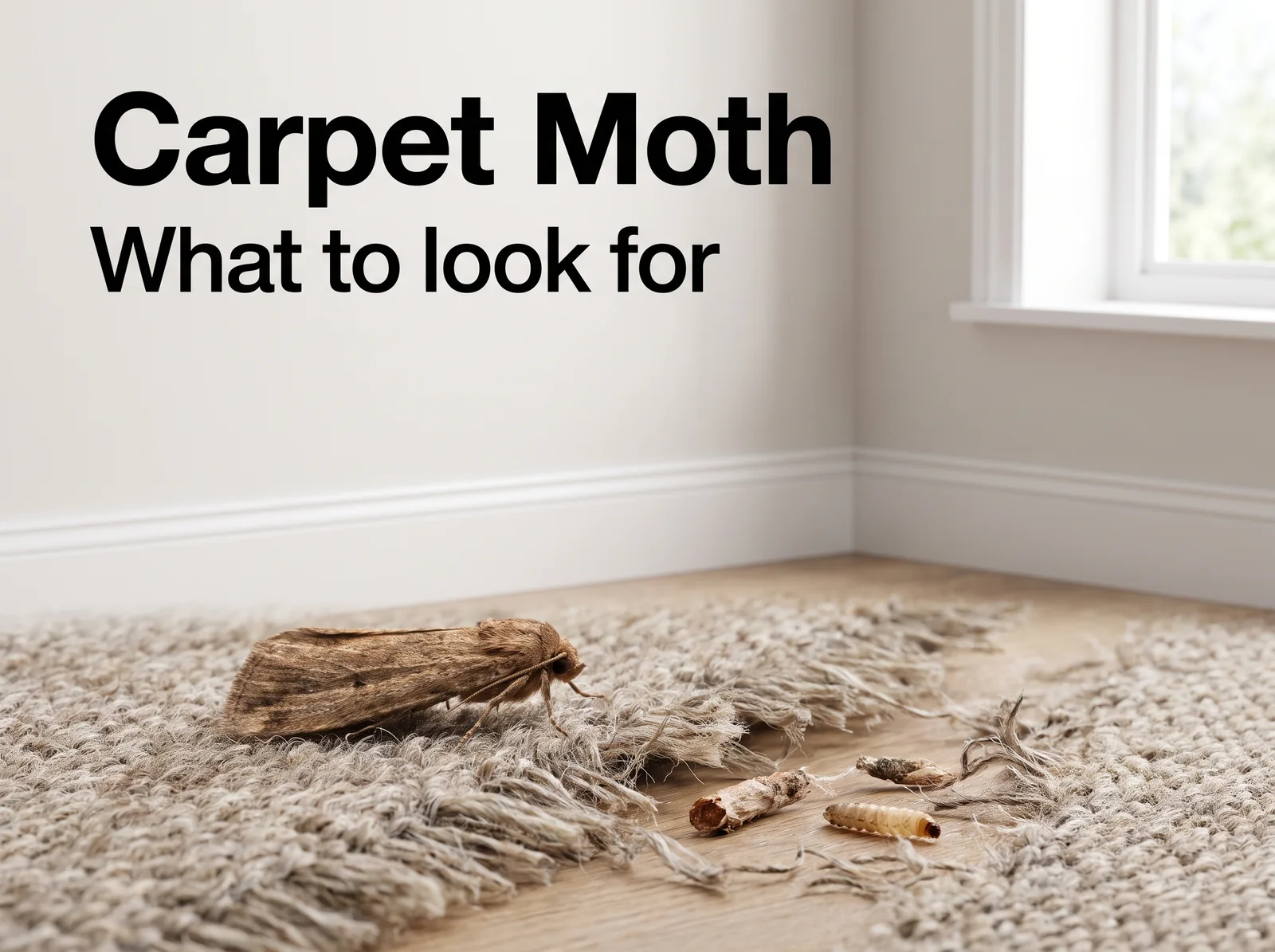
What should you do on day one if you suspect carpet moth?
Start by narrowing down where the activity is. Walk through closets, under rugs, and around upholstered furniture with a flashlight, checking corners and edges where fabric sits undisturbed for long stretches.
Pull back rugs and furniture a few inches from the wall. Carpet moth larvae favor quiet, low-traffic spots, so damage often shows up first along baseboards or under furniture legs rather than in the middle of a room.
If you find damaged fabric, bag it in plastic right away. This keeps larvae from spreading to nearby items while you finish the rest of your inspection.
Vacuum the general area thoroughly today, including carpet edges, under furniture, and inside closets. Vacuuming physically removes eggs and larvae, and it's one of the fastest ways to start reducing numbers before you do anything else.
How do you know it's really carpet moth and not something else?
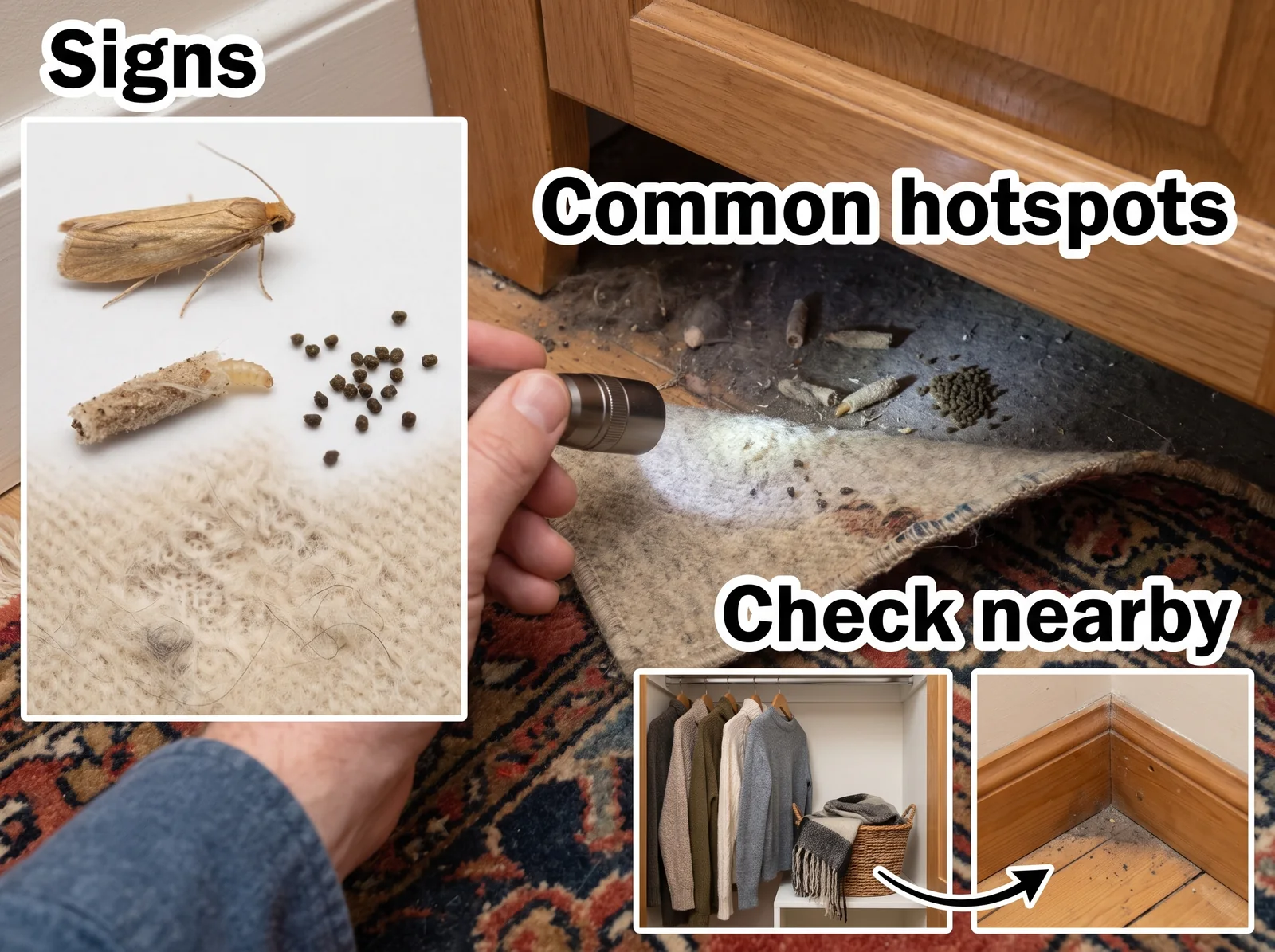
Carpet moth adults are small, tan to golden in color, and tend to run or flutter close to the ground rather than fly toward light. This is different from pantry moths, which are usually found near food storage and fly more actively.
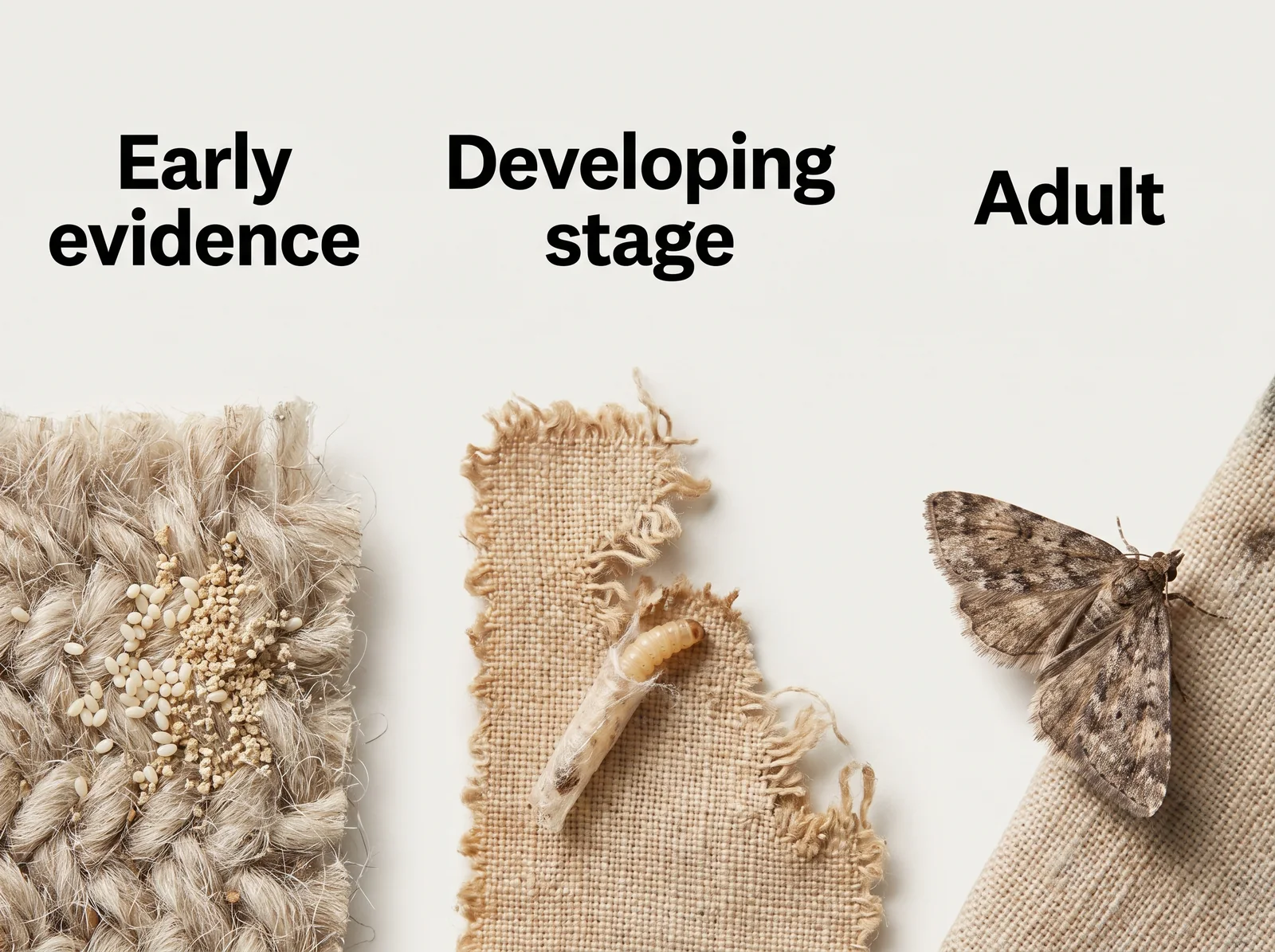
The damage itself is a strong clue. Carpet moth larvae leave irregular holes in wool, silk, feathers, or fur-based material. You may also see small silken tubes, cocoons, or a grainy debris that looks like sand near the damaged spot.
If you're not sure what you're looking at, a photo comparison helps before you spend time or money treating the wrong pest. Getting the identification right the first time is the fastest path to actually getting rid of carpet moth instead of chasing the wrong insect.
Where do carpet moths hide, and how do you find the source?
Carpet moth infestations almost always trace back to one or two source spots, even if you're seeing adult moths in several rooms. Finding that source is the key step in any real plan to get rid of carpet moth.
Check wool rugs, especially underneath and along the edges that touch the floor. Then move to closets: wool coats, sweaters, and any natural-fiber clothing stored for months without being worn or aired out are common hot spots.
Upholstered furniture with natural fiber stuffing, old feather pillows, and stored blankets or rugs in basements or attics are frequent culprits too. Pull items away from walls and check seams, folds, and undersides where light rarely reaches.
Once you find damage, look nearby for more. Larvae don't travel far from a food source, so a damaged sweater in a closet often means you should check every other wool item stored in that same space.
- Wool and wool-blend rugs, especially edges and undersides
- Closets with stored wool clothing or coats
- Upholstered furniture with natural fiber padding
- Feather pillows, down comforters, and old blankets
- Storage boxes in attics, basements, or under beds
What actually gets rid of carpet moth?
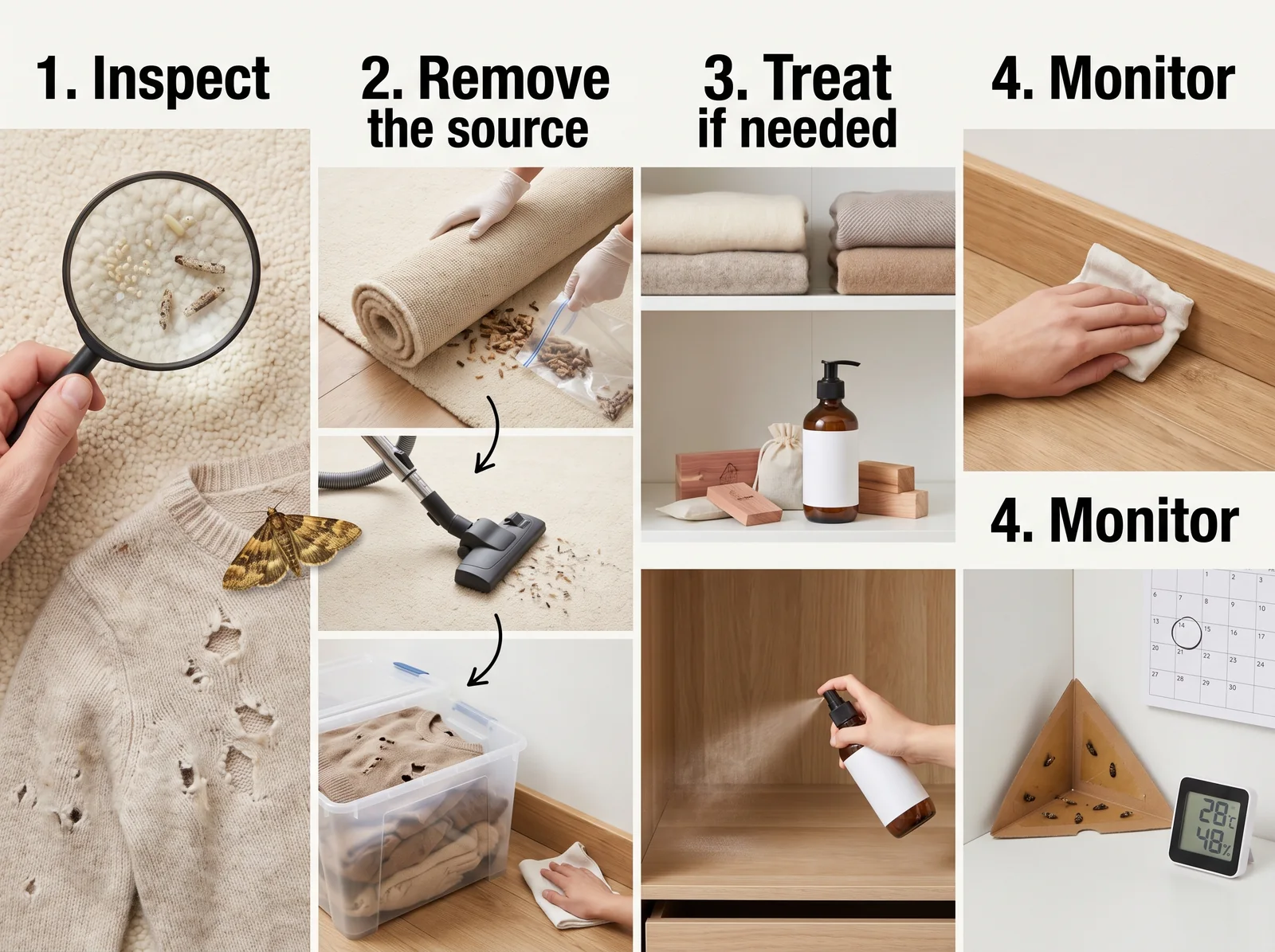
Removal starts with the damaged material itself. Wash infested washable fabric in hot water if the care label allows, or have it dry cleaned. Both heat and cleaning chemicals kill eggs and larvae on contact.
For rugs and larger items that can't be washed easily, a thorough, repeated vacuuming over several days helps pull out larvae and eggs from deep in the fibers. Pay extra attention to the underside and edges.
Items that can't be cleaned or washed, like some antique textiles, can sometimes be frozen. Sealing the item in plastic and keeping it in a freezer for several days can kill larvae and eggs, though this works best for smaller items.
If you decide a pesticide is needed after cleaning and vacuuming haven't resolved the issue, use only an EPA-registered product labeled for carpet moth and the specific site you're treating, and follow the label completely from start to finish.
How do you monitor for carpet moth after cleanup?
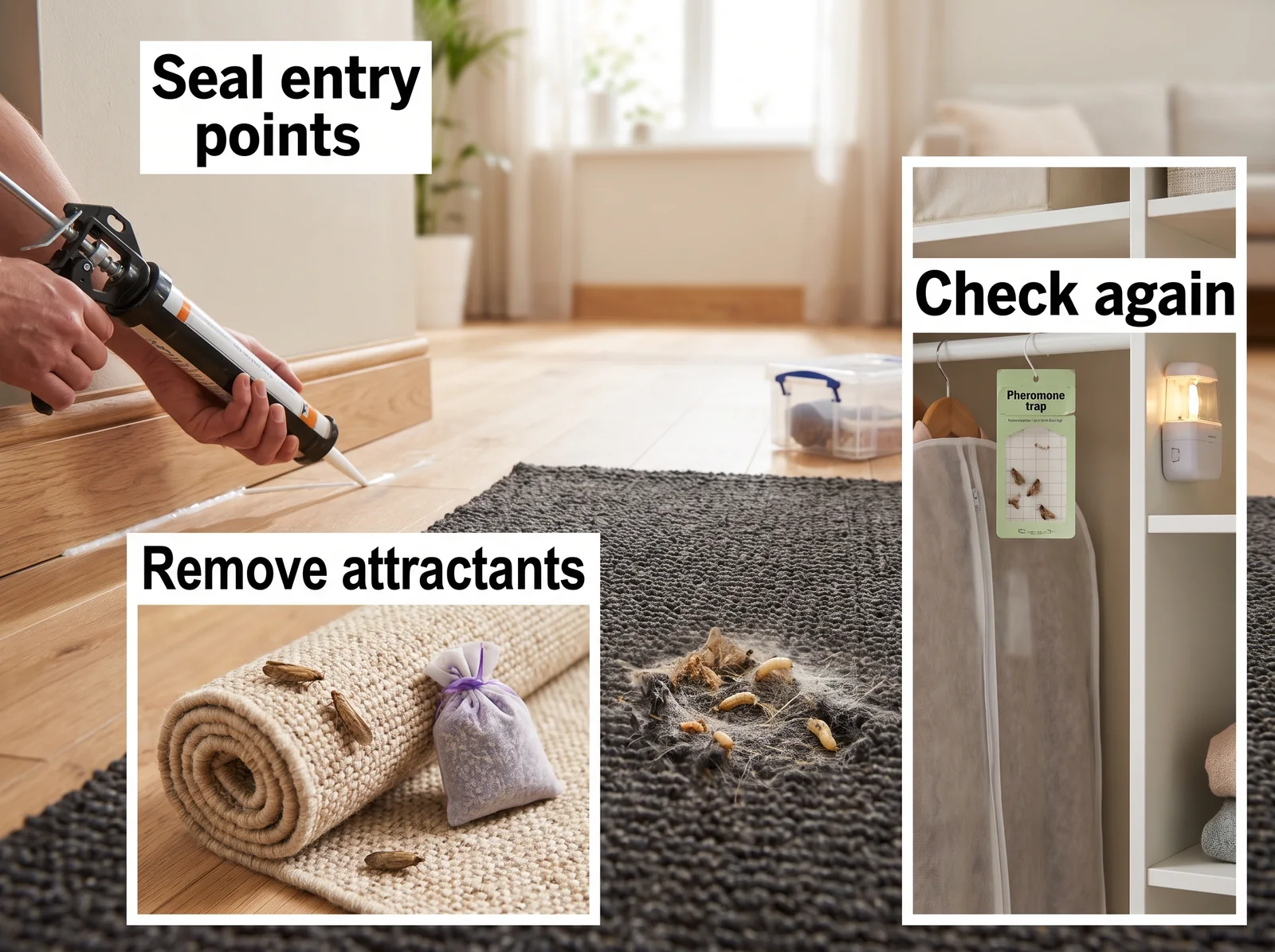
Sticky pheromone traps designed for clothes moths or carpet moths are a simple way to track whether adults are still active. Place a few in closets and near previously infested areas, then check them weekly.
A drop in trapped moths over several weeks is a good sign your cleanup worked. If numbers stay steady or increase, there's likely still a source you haven't found yet.
Keep checking stored wool items every month or two, even after you think the problem is solved. Carpet moth larvae can develop slowly, so a source that seemed clear can show new damage later if eggs were missed.
How do you keep carpet moth from coming back?
Store wool clothing, blankets, and rugs in sealed plastic bins or vacuum-sealed bags rather than open boxes or garment bags. Adult moths need access to lay eggs, and a sealed container removes that opportunity.
Air out and inspect stored wool items a couple of times a year, even if you're not using them. Sunlight and fresh air discourage moths, and it gives you a chance to catch small damage before it spreads.
Vacuum regularly, especially under furniture, along baseboards, and inside closets. Regular vacuuming removes eggs and larvae before they have time to mature, which matters more for long-term prevention than any single treatment.
If you've dealt with carpet moth once, it's worth checking secondhand rugs, furniture, or clothing before bringing them into your home. Used wool items are a common way infestations start over.
Is carpet moth treatment safe for kids and pets?
Most of the effective steps here, like vacuuming, washing, freezing, and trapping, don't involve any chemicals, which makes them naturally safe around children and pets.
If a pesticide product becomes necessary, check the label before buying to confirm it's approved for the room or item you plan to treat. Keep children and pets out of the treated area for the exact time the label specifies.
Store any pesticide product out of reach in its original container, and never transfer it to another bottle. If a pet chews on or a child touches a treated item, follow the label's first-aid instructions and contact poison control or a veterinarian if needed.
When does carpet moth become a job for a professional?
If you've cleaned, vacuumed, and monitored for several weeks and still see fresh damage or moth activity, it's a sign the infestation has spread further than you can reach with basic cleaning.
Large or valuable items, like antique rugs or heirloom wool pieces, are also worth handing off to a professional. Improper cleaning or freezing can damage delicate fibers, and a pest control technician or textile specialist can advise on safer options.
A licensed pest control professional can also confirm whether an infestation involves multiple hidden sources, which is common in older homes with wool carpeting under other flooring or insulation containing natural fibers.
Questions you may still have
How long does it take to get rid of carpet moth?
It depends on how widespread the infestation is and how thoroughly you clean and remove the source. Simple cases involving one closet or rug can improve within a few weeks of washing, vacuuming, and monitoring. Larger infestations spread across multiple rooms or hidden under furniture can take a few months to fully resolve, especially since carpet moth larvae develop slowly and new adults may still emerge from eggs laid before cleanup.
Can carpet moth infest synthetic carpet or only wool?
Carpet moth larvae feed on natural fibers like wool, fur, feathers, and silk, not synthetic materials like nylon or polyester. However, a wool-blend carpet or rug, or one with wool padding underneath, can still support an infestation even if the visible surface fibers are synthetic. Check padding and backing material, not just the top layer, when inspecting carpet and rugs.
Do carpet moths bite people?
No, carpet moths don't bite people or pets. They're a fabric pest, not a biting insect, so any skin irritation you notice is unrelated to carpet moth activity and worth checking with a different pest guide or a clinician if it continues.
Will mothballs get rid of carpet moth?
Mothball products can play a role, but only when used exactly as the label directs and in sealed containers with stored fabric. They aren't a substitute for cleaning, vacuuming, and finding the infestation source. Never use more product than the label allows or place mothballs loosely around a room, since that increases exposure risk without improving results.
Can I just throw away infested items instead of cleaning them?
Yes, for damaged items with low sentimental or monetary value, discarding them is often the simplest fix. Seal the item in a plastic bag before moving it through your home to avoid dropping larvae or eggs along the way. For valuable or hard-to-replace items, cleaning, freezing, or professional treatment usually makes more sense than throwing them out.